
Private wells are not monitored by a utility, and even city water can pick up problems in a new home’s plumbing. Our water testing and well inspections give you independent, lab-verified information about the water you will be drinking, before you commit to a purchase or when it is time for your regular testing.
We serve Raleigh, Cary, Durham and the surrounding Triangle. You can add water testing to your Home Inspection, Builder’s Warranty, or schedule it on its own.
Protecting Your Drinking Water: When & What to Test
Recommended Testing Schedule
- Every Year: Test for total coliform and fecal bacteria.
- Every 2 Years: Test for heavy metals, nitrates, nitrites, lead, and copper.
- Every 5 Years: Test for pesticides and Volatile Organic Compounds (VOCs).
When to Test Immediately
You should perform a water test outside of your regular schedule if:
- Expecting Mothers or Infants at Home: High nitrate levels in well water pose severe health risks to infants. (Note: Boiling water does not remove nitrates—it concentrates them).
- Medical Needs: Household members are immunocompromised or use home medical devices requiring water.
- Recent Repairs or Environmental Changes: After local land disturbances, surface flooding, or servicing any part of your well system.
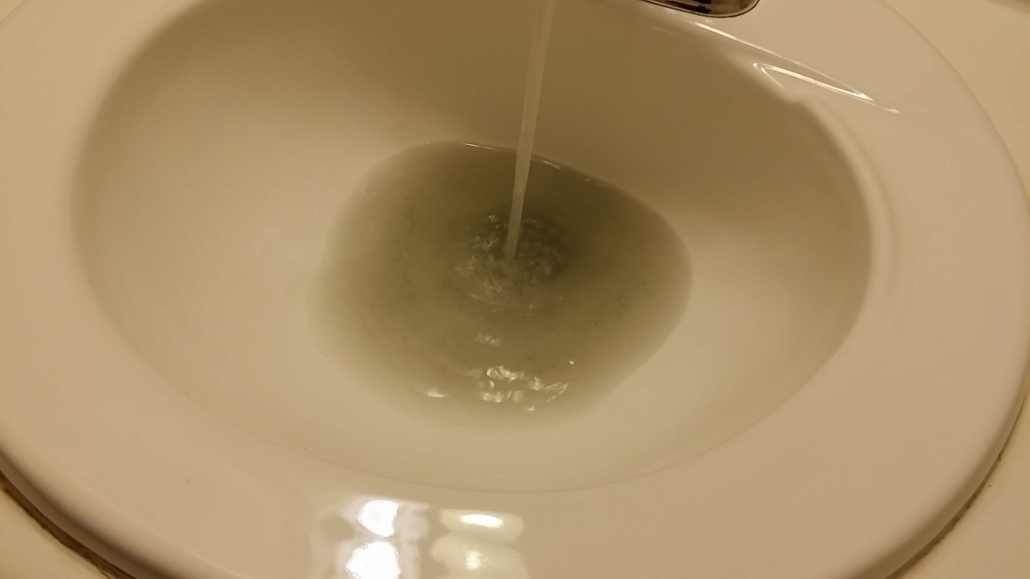
- Noticeable Changes: You observe sudden changes in water taste, color, clarity, or odor.
What’s Included in Our Well Visual Evaluation
During your inspection, we evaluate all accessible, above-ground well components to ensure:
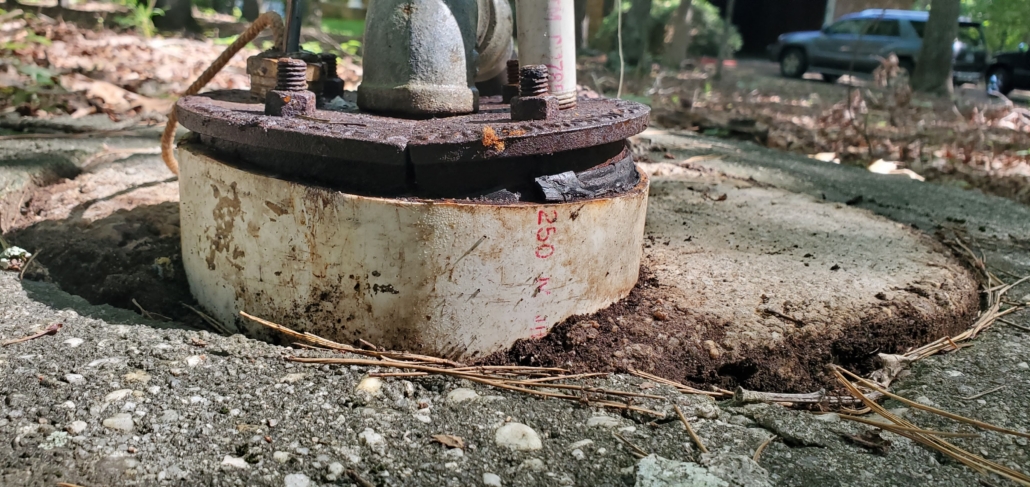
- The wellhead is properly elevated and sealed without cracks or openings that allow surface runoff or pest intrusion.
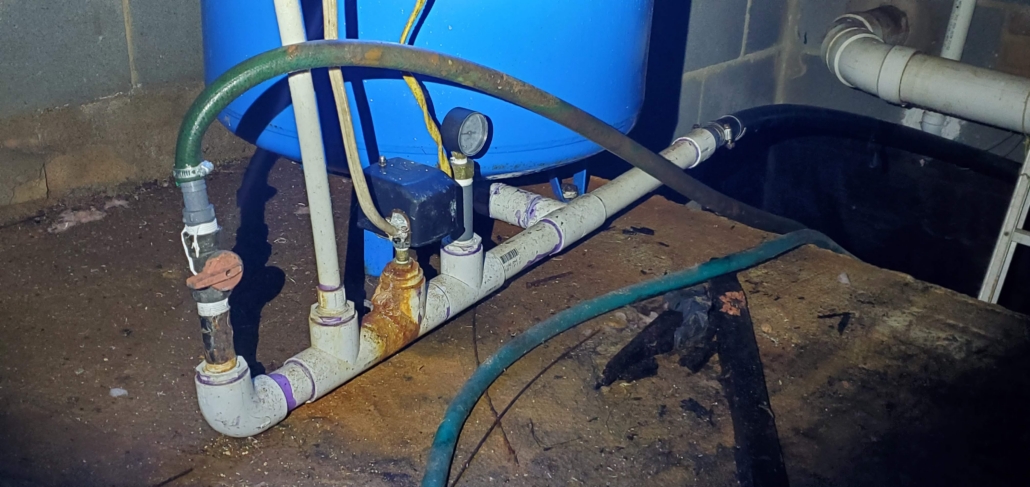
- Above-ground piping and electrical connections are safe, secure, and properly installed.
Please Note: Triangle Inspection Group provides independent visual evaluations and accredited lab water sampling. Per state regulations, only a licensed well contractor can pull well caps/pumps, perform mechanical drawdown, or execute pressure recovery tests.
Certified Laboratory Testing & Transparent Pricing
Independent Accredited Lab Analysis
We partner with an accredited laboratory to process all water samples. While our standard testing packages cover the most common residential needs, custom lab testing is always available. If you require testing for specific contaminants not listed below, just let us know—we can almost always arrange it for you.
Transparency & Neutral Advice
Across all the water testing we perform, we are consistently surprised by the high percentage of positive bacteria results in private well water, as well as the actionable findings we turn up during new construction municipal water testing.
Having your water evaluated provides critical baseline safety data and true peace of mind. Please know: we have zero financial incentive to upsell you on more expensive test panels. We earn the same small, flat fee regardless of which test you select—the difference in price goes directly to laboratory processing costs.
📌 Pricing Note: Listed water testing fees apply when bundled with a full home inspection. For standalone water sampling visits, a small trip fee is added based on travel distance.
FHA /VA Basic Water Test: $195
Total Coliform, E. coli
Lead, Nitrate, Nitrite, and Turbidity
Comprehensive Water Test: $325
Microbiological:
Total Coliform, Fecal/E. Coli, Total Bacteria Count
Radioactive Chemical Element:
Radon
Inorganic Chemistry:
Calcium, Copper, Iron, Magnesium, Manganese, Potassium, Sodium, Nitrite, Chloride, Chlorine, Color, Conductivity, Hardness, Nitrate, Odor, pH, Sediment, Total Dissolved Solids, Sulfate, Turbidity, Lead, Arsenic, Ammonia
Organic Chemistry:
Benzene, Bromobenzene, Bromochloromethane, Bromodichloromethane, Bromoform, Bromomethane, n-Butylbenzene, sec-Butylbenzene, tert-Butylbenzene, Carbon-Tetrachloride, Chlorodibromomethane, Chloroethane, Chloroform, Chloromethane, o-Chlorotoluene, p-Chlorotoluene, 1,2-Dibromo-3-Chloropropane, Dibromomethane, 1,2-Dibromoethane, m-Dichlorobenzene, o-Dichlorobenzene, para-Dichlorobenzene, Dichloromethane, Dichlorodifluoromethane, 1,1-Dichloroethane, 1,2-Dichloroethane, 1,1-Dichloroethylene, cis-1,2-Dichloroethylene, trans-1,2-Dichloroethylene, 1,2-Dichloropropane, 1,3-Dichloropropane, 2,2-Dichloropropane, 1,1-Dichloropropene, 1,3-Dichloropropene, trans-1,3-Dichloropropene, Ethylbenzene, Fluorotrichloromethane,
Hexachlorobutadiene, Isopropylbenzene, p-Isopropyltoluene, Methyl-t-Butyl Ether (MTBE), Monochlorobenzene, Naphthalene, n-Propylbenzene , Styrene, 1,1,1,2-Tetrachloroethane, 1,1,2,2-Tetrachloroethane, Tetrachloroethylene, Toluene, 1,2,3-Trichlorobenzene, 1,2,4-Trichlorobenzene, 1,1,1-Trichloroethane, 1,1,2-Trichloroethane, Trichloroethylene (TCE), 1,2,3-Trichloropropane, 1,2,4-Trimethylbenzene, 1,2,5-Trimethylbenzene, Vinyl Chloride, o-Xylene, m+p Xylenes
Health Scan $425
Microanalysis to Identify:
Bacteria, Fungi, Parasites, Insects, Minerals
Microbiological
Total Coliform, Fecal/E. Coli, Total Bacteria Count
Radioactive Chemical Element:
Radon
Inorganic Chemistry:
Calcium, Copper, Iron, Magnesium, Manganese, Potassium, Sodium, Nitrite, Chloride, Chlorine, Color, Conductivity, Hardness, Nitrate, Odor, pH, Sediment, Total Dissolved Solids, Sulfate, Turbidity, Lead, Arsenic, Ammonia
Organic Chemistry:
Benzene, Bromobenzene, Bromochloromethane, Bromodichloromethane, Bromoform, Bromomethane, n-Butylbenzene, sec-Butylbenzene, tert-Butylbenzene, Carbon-Tetrachloride, Chlorodibromomethane, Chloroethane, Chloroform, Chloromethane, o-Chlorotoluene, p-Chlorotoluene, 1,2-Dibromo-3-Chloropropane, Dibromomethane, 1,2-Dibromoethane, m-Dichlorobenzene, o-Dichlorobenzene, para-Dichlorobenzene, Dichloromethane, Dichlorodifluoromethane, 1,1-Dichloroethane, 1,2-Dichloroethane, 1,1-Dichloroethylene, cis-1,2-Dichloroethylene, trans-1,2-Dichloroethylene, 1,2-Dichloropropane, 1,3-Dichloropropane, 2,2-Dichloropropane, 1,1-Dichloropropene, 1,3-Dichloropropene, trans-1,3-Dichloropropene, Ethylbenzene, Fluorotrichloromethane,
Hexachlorobutadiene, Isopropylbenzene, p-Isopropyltoluene, Methyl-t-Butyl Ether (MTBE), Monochlorobenzene, Naphthalene, n-Propylbenzene , Styrene, 1,1,1,2-Tetrachloroethane, 1,1,2,2-Tetrachloroethane, Tetrachloroethylene, Toluene, 1,2,3-Trichlorobenzene, 1,2,4-Trichlorobenzene, 1,1,1-Trichloroethane, 1,1,2-Trichloroethane, Trichloroethylene (TCE), 1,2,3-Trichloropropane, 1,2,4-Trimethylbenzene, 1,2,5-Trimethylbenzene, Vinyl Chloride, o-Xylene, m+p Xylenes
Water Testing and Well Inspection FAQs
What does a well water test include?
Our standard packages cover a wide range of concerns from the basic FHA requirements to a wide ranging Health Scan with bacterial analysis. We collect the sample, and an accredited laboratory analyzes it. If you need testing for a specific contaminant, tell us and we can almost always arrange it. Review a Sample Report here.
What is the difference between a well inspection and a water test?
A water test is a laboratory analysis of the water itself. Our well inspection looks at the accessible, above-ground parts of the system, such as the wellhead, the piping and the electrical connections. They answer different questions, and many buyers want both.
Should I test the water when buying a home with a well?
Yes. Private wells are not regulated or monitored the way city water is, and a well can pass a visual look and still fail a bacteria test. A baseline test before closing tells you what you are buying and gives you the chance to ask for treatment or repairs.
Do I need to test city water in a new home?
It can be worth it. In new construction we sometimes find results worth acting on, such as problems that come from the plumbing or the construction process. Testing gives you a baseline and, if something shows up, lets you raise it while the builder is still responsible.
What happens if the test finds bacteria or another problem?
You will receive detailed results from the laboratory and if you have questions they are always available to discuss it with you. We are inspectors not a lab and most questions should be directed to the lab. For a bacteria result, the usual next steps are disinfection and a follow-up test, which a licensed well contractor or water treatment company can handle. We do not sell treatment systems or repairs, so we remain independent.
Can you pull the well cap or test the pump?
No. Under state rules, only a licensed well contractor can pull well caps or pumps, or perform drawdown and pressure recovery tests. We evaluate everything that is accessible above ground and take the water sample.
How long does it take to get the results?
A basic FHA test typically takes 7 business days, and the Health Scan can take up to 15 business days, depending on lab workload. Expedited shipping gets the sample to the lab faster and can bring results back up to 3 days sooner.
What areas do you serve?
We perform water testing and well inspections across the central Triangle, with local service areas that include:
- Raleigh, Cary & Morrisville
- Apex, Pittsboro & New Hill
- Garner, Fuquay-Varina & Holly Springs
Based in Cary, we also serve most other surrounding communities in Wake, Durham and Chatham counties, including Sanford. Call 919-247-2617 or check the online scheduler for our availability. See all areas we serve.